
Draft Zero: a screenwriting podcast
Spotify Apple Podcasts Website
Andere apps
Pocket Casts Overcast Castro Castbox Podcast Addict AntennaPod RSS-feed
Two emerging screenwriters – Chas Fisher and Stuart Willis – try to work out what makes great screenplays work. Discovering what it takes by analysing what successful writers put on the page.
Afleveringen
-
DZ-131: Negative Character Arcs vs Negative Feelings
1 november 2026 · 2 uur 23 min
Listen to learn how to control your audience’s perception of your character arcs. Lees meer
In our fourth entry into our series on character arcs, we explore both what makes an audience perceive a character arc to be “negative” AND separately what makes the audience feel negative about a character arc. The individual arc, as Chas puts it, is only one lever.
We dive into BACKROOMS, IF I HAD LEGS I’D KICK YOU and ANATOMY OF A FALL, further developing craft tools we’ve looked at earlier in the series - repeated character beats, emotional events, operant conditioning - as well exploring newer ones in more depth, such as relationship questions and symbolism.
And the tool we crystallise the most this episode is the relationship question — a sibling to plot, character, and thematic questions. Ask it and you often find the arc the film wants you to notice isn't the main character's at all. In ANATOMY OF A FALL the ostensible lead is Sandra, on trial for her husband's death — but the arc that is the most developed (and the most negative) most belongs to Daniel, the son, forced onto the trial stand to choose a truth.
We also talk BLUE MOON, GOODFELLAS, SCARFACE, EMILY THE CRIMINAL, WOLF OF WALL STREET, REVENGE OF THE SITH, SAINT OMER, BLADE RUNNER 2049, APOLLO 13, and whether blood-splatter analysis still counts as evidence anywhere.
As always: SPOILERS ABOUND and all copyright material used under fair use for educational purposes.
LIKE THIS EPISODE?
Watch and comment on YouTube.
Send us feedback.
Send us a voice message via Speakpipe!
Thanks to our Patrons, especially Khrob, Theis, Sandra, Jesse, Randy, Paulo, Thomas, Jennifer, Malay, Alexandre & Natalie and Lily.
→ Read the transcript for this episode.
———
"There's a difference between a character arc being negative and an audience feeling negative about the arc." — Chas Fisher @ 00:02:33
———
CHAPTERS
00:00:00 – Cold Open
00:00:27 – Negative Arc vs Negative Audience Feeling
00:03:18 – › Distinguishing character shi…
-
Teaser: Negative Character Arcs
27 oktober 2026 · 2 min
Teaser for our next episode: DZ-131. Please watch BACKROOMS, IF I HAD LEGS I'D KICK YOU, and ANATOMY OF A FALL.
-
DZ-130: Positive Character Arcs
1 september 2026 · 2 uur 33 min
Listen to understand how to dramatize a character's internal change. Lees meer
Welcome to our third entry in our character arc series; and the first where we talk about characters that actually change. And positively, too.
We deep dive into BARBIE, WIDOWS and ALL OF US STRANGERS to work out what makes an arc feel positive -- even if the film itself is heartbreaking. All three films are "positive arcs" that feel wildly different. We speculate whether that's due to the nature of the relationship questions, the use of additive/subtractive rewards; and whether it's do with the connection of the characters needs and their goals.
We further crystalize two tools we've been kicking around:
The relationship question — take a character question ("will she learn to connect?") and pose it as a relationship problem ("will these two grow closer or further apart?").
Additive vs subtractive rewards — We continue buildling on this idea from our Steadfast episodes. Does the story give the character something or take something away? And is that a good or a bad thing?
And Mel brings up a third:
Repeating a beat from a different angle so we can trace a character's gradual evolution.
We also debate whether Barbie's void scene is a producer's note personified — a director going into the endless nothing to spell the themes out one more time.
All this and more on DZ-130!
As always: SPOILERS ABOUND and all copyright material used under fair use for educational purposes.
LIKE THIS EPISODE?
Watch and comment on YouTube.
Send us feedback.
Send us a voice message via Speakpipe!
Thanks to our Patrons, especially Khrob, Theis, Sandra, Jesse, Randy, Paulo, Thomas, Jennifer, Malay, Alexandre & Natalie and Lily.
→ Read the transcript for this episode.
———
"A relationship question is taking what we think is an internal question about a character and defining it in terms of the relationship. Will Moana grow closer to their village coming back or will they'll grow further apart?" — Stu Willis @…
-
Teaser: Positive Character Arcs
27 augustus 2026 · 1 min
Teaser for our next episode: DZ-130. Please watch BARBIE, WIDOWS, and ALL OF US STRANGERS so you can learn about positive character arcs.
-
DZ-129: Steadfast Character Arcs - Agents of Change
31 juli 2026 · 2 uur 36 min
Listen to learn how to move an audience with a character who never changes. Lees meer
Do characters need to change for you to have a satisfying story? That's a question we've been asking since, like, episode five of this podcast. And we're finally talking about them - whatever you call 'em: steadfast, resilent, or flat arcs.
To that end, we breakdown MOANA, APOLLO 13, and THE DRESSMAKER to work out what carries a story when a character arc doesn't. If your protagonist isn't going to change, the drama has to come from what they do to everyone else.
We develop some tools that we reckon carry a steadfast story:
doubt and wobble (a character with no doubt isn't steadfast, they're a psychopath)
emotional events between characters
additive rewards (something is gained) versus subtractive ones (something is taken away) - a distinction we've borrowed borrowed from operant conditioning;
and how that difference changes the emotional tone of an ending.
The subtractive reward is why a happy ending can still feel like loss... and it's the thing we reckon that'll matter most when we get to negative arcs.
Chas, Mel and Stu also wibble-wobble over WILLOW, TAKEN, FERRIS BUELLER'S DAY OFF, THE MARTIAN, PROJECT HAIL MARY, THE GREY, ALL IS LOST, STAR WARS (as always), GREY GARDENS, PRISCILLA, and how many tampons NASA sent to space.
As always: SPOILERS ABOUND and all copyright material used under fair use for educational purposes.
LIKE THIS EPISODE?
Discuss with our Patrons on Patreon.
Join the discussion on Reddit.
Watch and comment on YouTube.
Send us feedback.
Send us a voice message via Speakpipe!
Thanks to our Patrons, especially Khrob, Theis, Sandra, Jesse, Randy, Paulo, Thomas, Jennifer, Malay, Alexandre & Natalie and Lily.
→ Read the transcript for this episode.
———
"If your characters are not going to arc, if they are going to remain steadfast, then creating multiple smaller emotional events is really important to keep the story dynamic." — Mel Killingsworth @ 02:32…
-
DZ-128: What even is a Character Arc?
28 juni 2026 · 1 uur 30 min
Listen to separate the three layers of an arc -- does the character change? How do they feel about it? And how is the audience positioned to feel about it? Lees meer
Stu, Chas and Mel finally begin their long-awaited journey into CHARACTER ARCS. In this "primer" episode, we try find some learnings and analytical lenses that we can then apply in future breakdowns.
In this episode, we explore differences between a character learning something and a character fundamentally changing, how to dramatise that, and how the show teaches the audience to perceive that transformation (whether positively or negatively).
Throughout the discussion, we skate over A NEW HOPE, BLUE MOON, BREAKING BAD, BETTER CALL SAUL, the French real-time thriller FULL TIME, A KNIGHT OF THE SEVEN KINGDOMS, THE GREEN KNIGHT, ALL OF US STRANGERS, PREDATOR BADLANDS, FIELD OF DREAMS, MEG 2, and Stu's receding hairline.
Ultimately, this discussion synthesises into a series of questions to ask of a story and the main point-of-view character living through that story:
Does the audience enter the story with an expectation that characters will change?
How does the story teach the audience to expect characters to change or not?
Do the characters change? Is it experiential change or internal value change? How is that dramatised?
Is the character aware that they changed? How do they feel about that change? Does that matter?
How does the story want the audience to feel about that change? If different to the character’s perception, how does the story pull that off?
How does the story world punish or reward the change?
What are the values explored by the arc? How does this relate to the theme?
How is contrast vs affinity/unity portrayed through the characters’ journey? Order vs disorder vs inertia
What is the emotional event created between the character and audience as a result of the journey? Does the character end up more intimate or distant from the audience?
In upcoming episodes, we intend to apply these …
-
DZ-127: Secrets and Clues 2 - The Cost of Revelation
27 mei 2026 · 1 uur 52 min
Listen to learn the emotional impact of revealing secrets vs discovering them. Lees meer
In this episode Stu, Chas and Mel apply the Landmark–Hidden–Secret framework (from DZ-126) across two very different genres: the thriller SIDE EFFECTS (2013) and the tragicomic pilot of SHRINKING.
SIDE EFFECTS is a film of two genres. The first half plays as a drama about depression and over-medication; the second half is a 90s thriller. We talk about how every time Dr Jonathan Banks uncovers a new piece of information, it puts him in danger — and that danger motivates him to uncover more.
In SHRINKING, we see a different use of the framework. "What are psychologists but detectives of the mind?" Rather than the cost of finding secrets, it's about the cost of sharing them. Chas also comes out of this with a paradigm he's been building toward (but we're keeping what that is secret until you listen!)
And inevitably we go on some tangents: whether SIDE EFFECTS should even have been an erotic thriller!
As always: SPOILERS ABOUND and all copyright material used under fair use for educational purposes.
LIKE THIS EPISODE?
Discuss with our Patrons on Patreon.
Join the discussion on Reddit.
Watch and comment on YouTube.
Send us feedback.
Thanks to our Patrons, especially Khrob, Theis, Sandra, Jesse, Randy, Paulo, Thomas, Jennifer, Malay, Alexandre and Lily.
→ Read the transcript for this episode.
———
"Every time Dr Jonathan Banks uncovers a new piece of information, it puts him in danger -- and that danger motivates him to uncover more." — Chas Fisher @ 00:26:04
———
CHAPTERS
00:00:00 – Cold Open
00:00:16 – Intro: Secrets and Clues 2 - the Cost of Revelation
00:01:03 – Previously on Secrets and Clues (Recap of Part 1)
00:04:24 – Flashforward Insights
00:09:29 – SIDE EFFECTS
00:20:18 – › The First Half: Push and Misdirection
00:28:41 – › Genre Shift: Banks Becomes the Detective
00:48:06 – SHRINKING
01:00:02 – › The Inverted Paradigm: When Everyone Knows
01:07:47 – › The Cos…
-
DZ-126: Secrets and Clues
5 mei 2026 · 1 uur 29 min
Listen if you want to understand how hidden information drives character motivation and plot structure! Lees meer
“Getting information puts your character in danger. And danger rewards your character with information." — One of three ideas we steal from game design in this episode. In this two part series, we talk about how secrets, clues and hidden information motivate characters and may (or may not) help you plot from a character perspective. Part One (this episode) looks at WAKE UP DEAD MAN; while Part Two looks at SIDE EFFECTS, and the pilot episode of SHRINKING.
The other two (related) ideas are:
Landmark information (characters just have it), Secret (they know it's there, need to unlock it), and Hidden (invisible until they pay the cost)
Narrative velocity — are characters pushed forward or are they pulled forward?
To that end, in this episode Stu, Chas and Mel start with the murder mystery (ostensibly the easier deep-dive): Rian Johnson’s WAKE UP DEAD MAN. But this is a complex film made even more complex by being a dual-protagonist film. Uhuh. Benoit Blanc is pulled through the story by his need to solve the case; Father Judd pushed through, against his will, to prove his innocence. Breaking down how that plays out — and why it matters for the kind of escalation each character can sustain — is the heart of the episode.
And inevitably we go on some tangents: pointers, plants, and underpinnings (from our Everything Everywhere All At Once episode) fair play in locked-room mysteries, Narrative POV (as always) and node-based plotting and what dungeon-crawl game design has to do with writing a web of clues.
As always: SPOILERS ABOUND and all copyright material used under fair use for educational purposes.
LIKE THIS EPISODE?
Discuss with our Patrons on Patreon.
Join the discussion on Reddit.
Watch and comment on YouTube.
Send us feedback.
Thanks to our Patrons, especially Khrob, Theis, Sandra, Jesse, Randy, Paulo, Thomas, Jennifer, Malay, Alexandre and Lily.
→…
-
DZ-125: Oscars One-shot - BLUE MOON
26 februari 2026 · 1 uur 18 min
Listen if you want to understand how narrative POV, screenplay format, and dialogue craft can elevate a contained biopic into an Oscar-nominated film Lees meer
BLUE MOON is a talky, period-drama that film about an obscure songer-writer in the 1940s. Yet, it attracted world-class talent AND Academy Award nominations, including for it's script. Join Chas & Mel as they explore how narrative POV, interweaving relationships, hooky dialogue, and even the screenplay format itself make the script for BLUE MOON so great.
While Stu is still on show and we are between the 2026 Oscar nominations and the actual ceremony, our patreons selected BLUE MOON for this one-shot and boy are Mel and Chas glad they did. They dive into many lessons learned in previous episodes, like our character-driven episode… or analysis of French scenes in Adolescence… or the story-telling power that comes from the audience knowing the ending from biopics.
As always: SPOILERS ABOUND and all copyright material used under fair use for educational purposes.
LIKE THIS EPISODE?
Discuss with our Patrons on Patreon.
Watch and comment on YouTube.
Send us feedback.
Thanks to our Patrons, especially Khrob, Theis, Sandra, Jesse, Randy, Paulo, Thomas, Jennifer, Malay, Alexandre and Lily.
→ Read the transcript for this episode.
———
"When I say rules, I mean the prescriptive rules of when someone posts something on screenwriting and everyone goes *Oh, you broke all the rules*. I'm saying this is good. I'm saying most of those rules are suggestions or most of those rules are given to you when you are learning how to write for a reason." — Mel Killingsworth @ 00:38:42
———
CHAPTERS
00:00:00 – Cold Open
00:00:32 – What Makes a Contained Biopic Compelling?
00:02:19 – Flashforward Insights: POV, French scenes, dialogue craft, and structure
00:04:32 – BLUE MOON: Plot Summary and Structural Overview
00:08:00 – › How script format signals emotional breaks in a real-time story
00:13:34 – Controlling narrative POV
00…
-
DZ-124: Making the Despicable Compelling
30 januari 2026 · 1 uur 11 min
Listen if you need audiences to root for characters who do terrible things Lees meer
Mel and Chas continue to explore what Noir (the genre) can teach writers of all other genres. In particular:
How to keep the audience on side of characters doing reprehensible things;
How to control your audience understanding of those reprehensible actions; and
Distinguishing between characters undergoing transformative arcs against discovering their true natures
In finding the common craft tools of Noir over 100 years, this Part 2 looks at two modern noirs – DEVIL IN A BLUE DRESS (1995) and WOMAN OF THE HOUR (2024) – after Part 1 looked at the classic DOUBLE INDEMNITY and THE LONG GOODBYE.
Despite Chas claiming to have edited this episode it was, in fact, Chris Walker who saved the day and got this done. Thanks Chris.
As always: SPOILERS ABOUND and all copyright material used under fair use for educational purposes.
LIKE THIS EPISODE?
Watch and comment on YouTube.
Send us feedback.
Thanks to our Patrons, especially Khrob, Theis, Sandra, Jesse, Randy, Paulo, Thomas, Jennifer, Malay, Alexandre and Lily.
→ Read the transcript for this episode.
———
"I think these films have got really strong control over the questions and that's how they get us to follow, compelling us to follow characters who are doing terrible things." — Chas Fisher @ 01:06:08
———
CHAPTERS
00:00:00 – Using noir as a lens
00:01:56 – DEVIL IN A BLUE DRESS
00:07:06 – › Period setting, race, and noir's embedded worldview
00:10:30 – › Voiceover as access to morally compromised decisions
00:22:02 – › How the film justifies rooting for Easy's transgressions
00:29:09 – › Character worldview versus film worldview in noir
00:31:33 – WOMAN OF THE HOUR
00:37:15 – › Why WOMAN OF THE HOUR qualifies as noir
00:43:25 – › The system as collective villain enabling the killer
00:53:12 – › Depiction without endorsement, empathy without sympathy
01:04:30 – Key Learnings
01:08:50 – Thank you Patreons!
FILMS
DEVIL IN …
Vergelijkbare podcasts
-
 Nooit meer slapen
NPO Radio 1 / VPRO
Laatste aflevering 6 november 2026
-
 Moviegelul met vrienden
Leon Jackson en Bram Koedam
Laatste aflevering 22 oktober 2026
-
 AD Media Podcast
AD
Laatste aflevering 27 oktober 2026
-
 Culturele bagage
de Volkskrant
Laatste aflevering 5 november 2026
-
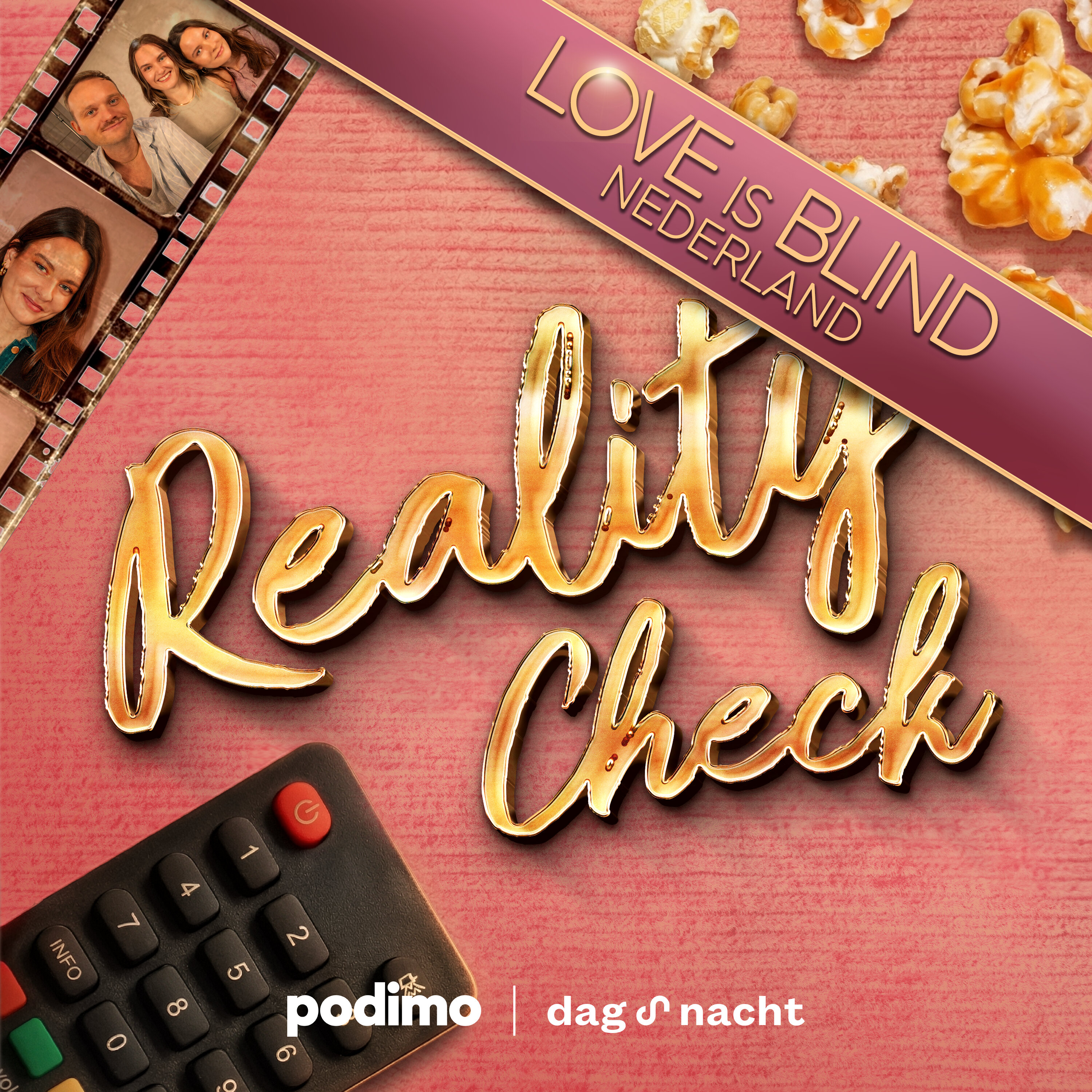 Reality Check - Love is Blind Nederland
Dag en Nacht
Laatste aflevering 5 november 2026
-
 De Lesbische Liga Podcast
NPO Luister / NTR
Laatste aflevering 31 oktober 2026
- Categorieën
- Kunst , Podiumkunsten , Tv , Film
- Status
- Loopt nog
- Verschijnt
- Elke maand
- Lengte
- Meestal 1 uur 50 min
- Afleveringen
- 137
- Laatste aflevering
- 1 november 2026
- Eerste aflevering
- 1 februari 2014
- Taal
- Engels