
The Master Investor Podcast with Wilfred Frost
#172 bij Apple Podcasts Zakelijk
Andere apps
Pocket Casts Overcast Castro Castbox Podcast Addict AntennaPod RSS-feed
Hosted by Wilfred Frost, The Master Investor Podcast is for anyone passionate about business and investing. We are pro ambition, celebrate success and provide you the edge. Join us and learn from the most legendary investors and business leaders in the world.
Afleveringen
-
Big Tech Selloff: Dan Niles on What Happens Next
3 november 2026 · 1 uur 6 min
Is the AI boom approaching its peak, or are we simply witnessing a painful but temporary correction before the next leg goes higher? Lees meer
In this episode of The Master Investor Podcast, Wilfred Frost sits down with Dan Niles of Niles Investment Management, one of the world's leading technology investors, to dissect the recent tech selloff and assess where we are in the AI investment cycle. Drawing parallels with the late 1990s dot-com boom, Dan explains why he believes today's market looks more like 1997–98 than 2000, while warning that the eventual AI bust could be every bit as brutal.
Dan examines the growing pressures on the AI trade, from rising financing costs and slowing revenue growth at leading AI companies to the challenges facing data centre infrastructure and the increasing scarcity of capital. He also explains why he believes Anthropic is better positioned than OpenAI, why Microsoft is in the “catbird seat” for enterprise AI, and why Google could emerge as a long-term winner despite the growing threat to its traditional search business.
The conversation also explores the outlook for Meta, Intel, Apple and Nvidia, including how the shift towards agentic AI could reshape the semiconductor industry. Dan discusses the potential implications of the US midterm elections for data centre investment, the risks posed by rising oil prices and interest rates, and why he believes investors need to be far more selective in the current environment.
Finally, Dan shares his approach to managing risk through market volatility, explaining why investors must remain nimble, avoid becoming emotionally attached to their investment views, and recognise that not every dip is a buying opportunity.
Recorded Monday 2nd November 2026
0:00 Intro
3:40 Where are we in the AI investment cycle?
6:50 Two biggest risks to the AI trade: financing costs and slowing growth
11:25 @AnthropicAI IPO: a critical test for the AI boom
14:30 @Microsoft - enterprise winner
22:08 @Meta positione…
-
Picking Private Market Winners: Maggie Fanari on SpaceX, Anthropic & Stripe
28 oktober 2026 · 49 min
Where will the next wave of AI investment opportunities emerge, and how can investors access them? Lees meer
In this episode of The Master Investor Podcast, Wilfred Frost speaks to Maggie Fanari, CEO of J. Rothschild Capital Management, which manages RIT Capital Partners, the investment trust founded by Jacob Rothschild in 1988. Maggie shares the thinking behind investments in SpaceX, Anthropic, Stripe and Cognition, explaining why she believes the AI opportunity has a long runway, but why stock selection is key with huge risk posed by index concentration and the reality that not every AI bet will be a winner.
From making more than four times RIT’s money on SpaceX to identifying the potential of agentic AI, Maggie discusses what she looks for in exceptional businesses, founders and management teams. She also explores opportunities beyond the market’s most crowded trades, including US smaller companies, Japanese companies embracing corporate reform and European defence.
Wilf and Maggie examine RIT’s recent performance, and how it combines public equities, private investments and uncorrelated strategies to pursue long-term growth while seeking to protect capital in falling markets. They also discuss the reasons for the 22% discount to Net Asset Value that the fund trades at, which Maggie argues will close and provides an exceptional entry point to her fund.
Recorded 27th October 2026
0:00 Intro
2:30 History of RIT
4:30 Long term performance
5:54 Earnings resilience
7:05 Concentration risk
8:00 Rates not too high
10:22 Bullish Japan
14:47 Backing SpaceX early
20:10 Anthropic
23:55 AI Bubble?
28:00 Stripe
31:44 Cognition
34:14 Uncorrelated Assets
35:50 Credit holding in
38:35 Light on Gold
40:10 Discount to NAV
45:05 Closing advice
Watch the full episode on The Master Investor Podcast YouTube channel
Follow @WilfredFrost on X and Linked In
And NEW: Subscribe to The Master Investor Podcast Memos
Sponsored by BNY Investments, Interactive Brokers - ibkr.com…
-
How to Profit When Cycles Turn – Django Davidson on Capital Cycle Investing
13 oktober 2026 · 51 min
What evidence do you use when weighing up an investing decision? In this masterclass on capital cycle investing, Wilf sits down with Django Davidson, founding partner and portfolio manager at Hosking Partners – an $8 billion global investment firm focused on the capital cycle approach, an investing philosophy which has led their firm to significant outperformance in recent years. Lees meer
Django breaks down their methodology; how high profits actually attract devastating competition, and in contrast why low returns on capital can provide fantastic entry points to stocks. The key is knowing how to spot the turning points before the crowd catches on.
Moving beyond Wall Street's obsession with demand forecasts and growth narratives, Django shares why true contrarian outperformance relies on measuring supply, tracking replacement costs, and understanding industry consolidation. He explains why the era of zero interest rates was an aberration and how the return of a real cost of capital has revived two powerful forces: mean reversion and creative destruction.
Wilf and Django discuss Hosking’s early investment in memory chip stocks – Micron, Samsung, SK Hynix – and how the capital cycle investing framework drew them into the space a decade ago, but is also leading them to sell today as a key warning sign – enterprise value to replacement cost – flashes red.
They also cover why acute supply shortages in copper and platinum make both metals a core holding for Hosking; why his “Death Of The Brand” thesis a decade ago predicted Nike’s current fall from grace; and why the company’s biggest country bet is on Japan, which they feel is at the start of a long upswing.
Recorded 12th October 2026
0:00 Intro
3:25 Capital Cycle Investing
5:58 US capital returns declining
10:30 How to spot turn in cycle
14:05 Unconstrained globally
20:00 Focus on supply
24:30 Semis – time to sell
27:18 Buy Chemicals
29:30 Long time horizons
31:25 Buy Platinum
33:53 Buy Copper
36:20 Less constr…
-
The Bond Pivot: Jim Bianco on Why it’s Time to Start Buying Bonds
5 oktober 2026 · 59 min
Jim Bianco, President and Macro Strategist at Bianco Research, sits down with Wilf for an in-depth look at global bond markets, central bank policy, and what it means for equities and your portfolio construction. Lees meer
After maintaining a bearish stance on bonds since 2020, Bianco reveals why he has finally stepped back from that call and now sees value in the bond market. With US yields crossing 5% and global rates surging, Bianco explains why bonds are offering fair value for the first time in years, and why strong nominal GDP growth justifies higher rates as opposed to sending warning signs.
Despite that major pivot, Jim explains why he prefers long-term TIPS over nominal Treasuries to hedge ongoing inflation risks, and explores the risks to his call that come from surging bond yields in Europe and Japan, which could mean there is more downside to come.
Wilf and Jim discuss the evolving nature of the Federal Reserve under Kevin Warsh including why the unanimous 12–0 September vote to hike rates makes it HARDER for the Fed to re-establish their credibility in the short term, with risks of higher yields as a result through the rest of 2026, and enormous competing pressures on the Fed around their next two meetings, which sit either side of the mid-term elections.
They also discuss why rising yields haven’t derailed stocks more; why he thinks Scott Bessent has been forced to make outlandish claims like “I am the house”; why the scale of the US debt problem is overstated; why he is constructive gold, but disappointed by its recent performance; why he loves crypto long term and thinks the failure of the Clarity Act is in fact a good thing.
Finally Jim outlines why a 60/40 portfolio is still sensible long term, but not for the reasons you might think, and why the key question for the next stock market crash is not the level prices fall to, but the time they remain there – “a bear market is time, not price.”
Follow Wilfred Frost on X: @WilfredFrost
Follow Jim Bianco o…
-
Michael Hartnett: I coined “Mag7” - Here’s What Ends Their Run
28 september 2026 · 1 uur
In this rare extended interview, Wilf sits down with the famed market contrarian and man who coined the phrase "Magnificent Seven", Bank of America’s Chief Investment Strategist Michael Hartnett. Hartnett unpacks the structural forces reshaping markets this decade, from ballooning fiscal spending and nominal growth, to the massive rotation away from sovereign debt. He explains why the AI trade now faces a twin threat: bond market discipline on Wall Street and pushback from voters on Main Street. Lees meer
From the Mag 7 shifting from cash-flow machines to spending $1.2 trillion on CapEx, to the historical warning signs from the 1880s railroad boom and the 1990s dot-com bubble, Hartnett provides an unvarnished playbook for navigating today's market regime.
Hartnett breaks down the reasons why the equity market has not yet collapsed in the face of spiking bond yields and the importance of the Fed reestablishing its credibility. “Central Banks never run out of ammunition, but they can run out of credibility. The Fed has now been forced to do things to restore its credibility. I think that they're panicking and I think that they'll win.”
He reflects on the lessons learned from past stock market bubbles – with particular focus on the Railroad and Nifty50 bubbles which he feels have similarities to today – and answers the question of what pops a bubble? Bonds and social upheaval – which is why he is so focused on the midterms which he feels could derail the AI trade.
Finally – the ultimate contrarian – he explains why he lives by the mantra "Buy Humiliation, Sell Hubris" – revealing and explaining the contrarian trades you should have exposure to – certain bonds, China, small caps and real estate.
Recorded 23rd September 2026
Watch the full episode on The Master Investor Podcast YouTube channel
And follow @WilfredFrost on X and Linked In
Sponsored by BNY Investments, Interactive Brokers - ibkr.com/masterinvestor, The World Gold Council and London Stock Exchange Group (LSEG…
-
If Global Trade Breaks, It’s Worse Than 2008 | Ed Conway
22 september 2026 · 1 uur 3 min
What happens if the invisible system feeding and fuelling our planet suddenly breaks down? Lees meer
In this episode of The Master Investor Podcast, Wilfred Frost sits down with Ed Conway, Economics & Data Editor at Sky News and bestselling author of Material World and Trade World.
Drawing on Ed’s latest book, Trade World, they explore the enormous importance - and growing fragility - of global trade, and why the hyper-efficient, just-in-time supply chains that have delivered decades of cheap goods are increasingly vulnerable to tariffs, geopolitical friction and war.
Ed offers some stark warnings about what could happen if the global trading system begins to break down:
“So if we were to have a kind of breakdown in global trading system, God forbid, it would make the Global Financial Crisis look like a walk in the park because this is everything.”
And, looking at the growing tensions between major powers:
“It's not implausible that if things go south from here, people will look back and say this was the foothills for another world war.”
At the same time, the fact that the stakes are so high and the world is so integrated encourages him that the cost of escalating conflicts and diminishing trade would far outweigh the upside for world leaders. He also unpacks the ingenuity of trade middlemen who have ensured a resilience to world trade such that while oil prices have risen this year, they haven’t risen as much as worst estimates.
“Trade doesn't just stop when a trade barrier is put in place. It adapts and it evolves - it’s like water - it’s very difficult to stop it from finding a level.”
They also explore why established industries so often push back against new technologies and innovation; the extraordinary moment in history when technological progress delivered an even greater economic transformation than AI; and why global yields have reached multi-decade highs, how hedge funds are driving the gilt market, and the mechanics behind ending QT.
#EdConway ’s new bo…
-
Optimistic On AI, Calm About Yields – But Own Land – Thomas Peterffy
16 september 2026 · 47 min
Thomas Peterffy is worth well over $100bn, making him one of the 20 wealthiest people in the world. He is a markets titan and the founder of Interactive Brokers, and joins Wilf on this week’s episode of The Master Investor Podcast. Lees meer
He breaks down how Interactive Brokers has grown both earnings and its share price by around 40% per year over the past five years, driven by its focus on building the products its customers want. He explains why he remains calm about the rise in bond yields, believes the Fed will hike rates, and disagrees with that decision.
Peterffy is optimistic about AI, arguing that fears of a Hindenburg moment are overstated and that AI will overwhelmingly boost the economy and stock market. He points to companies such as Nvidia, which he believes are “cheap” when their earnings growth is taken into account.
Wilf and Thomas also discuss prediction markets at length. Peterffy boldly predicts that they will eventually account for the majority of Interactive Brokers’ earnings, explaining the decade-long thinking behind his forecast, including his attempt to buy Kalshi five years ago.
Most strikingly, Peterffy reveals the deeply personal rationale behind his massive land holdings across the United States. Drawing on his childhood in communist Hungary, he puts the probability of capitalism faltering in America at 20% and explains why he sees physical land - rather than gold - as the ultimate generational hedge.
Check out our podcast channel The Master Investor Podcast YouTube channel
And follow @WilfredFrost on X and Linked In
Sponsored by BNY Investments, Interactive Brokers - ibkr.com/masterinvestor, The World Gold Council and London Stock Exchange Group (LSEG).
The Master Investor Podcast is produced by Paradine Productions, Master Investor Ltd in association with Bird Lime Media.
This podcast is for information purposes only. It does not constitute an invitation or inducement to engage in any investment activity. It is not a financial promo…
-
Forget Tech: Why Hard Assets Will Win The Decade | Jeff Currie
7 september 2026 · 59 min
This week on The Master Investor Podcast, Wilfred Frost sits down with one of the world’s foremost commodities experts, Jeff Currie. After nearly three decades building and leading commodities research at Goldman Sachs, Currie shares an unvarnished masterclass on why we are only in the "second or third inning of nine" of a generational commodity supercycle that will see hard assets crush tech and the dollar this decade. Lees meer
At the heart of Currie’s thesis is a simple but radical shift: mounting sovereign debt, financial repression and the debasement of currencies will drive investors away from traditional financial assets and towards gold, energy, agriculture and other hard assets.
Currie explains his bold $10,000 gold forecast, why he would rather own gold than the dollar or pound sterling, and why central banks - particularly in emerging markets - are continuing to de-dollarize and accumulate gold. He reveals why he favours his “Munificent Seven” energy giants over tech’s Magnificent Seven - Exxon Mobil, Chevron, ConocoPhillips, BP, Shell, Total and Saudi Aramco - and explains why agriculture, uranium, critical minerals and other physical assets could all benefit from the same structural forces.
He also offers a sharp critique of Bitcoin and crypto, and explains why he believes digital ledger technology is better suited to AI agents than humans.
From the Iran War and extreme weather to droughts, El Niño and intervention in the bond market, Currie explains why the events of 2026 have only strengthened his conviction - and why he believes the great rotation into hard assets is still in its early stages.
0:00 Intro
2:23 Yields rising
4:00 Bessent intervention is financial repression
7:36 OWN GOLD
13:08 Not worried about gold pullback
18:36 Energy over Tech
23:30 Watch Diesel
27:02 China buying crude again
29:23 Crude reserves low
30:19 Recession risk underpriced
34:53 “Munificent 7”
36:53 Ag commods exploding
41:22 Buy any commod pullback
44:20 Recessi…
-
Beyond The Mag 7 – Positioning For Earnings Peaking and Yields Rising – Liz Ann Sonders
2 september 2026 · 57 min
This week on The Master Investor Podcast, Wilfred Frost sits down with Liz Ann Sonders, Chief Investment Strategist at Charles Schwab, which oversees $13.4 trillion in client assets. Lees meer
Liz Ann begins with the surge in global bond yields and the growing tension between Treasury Secretary Scott Bessent and the Federal Reserve. She argues that rising yields don't necessarily spell trouble for equities - provided the move remains orderly - and highlights 5% on the US 10-year Treasury as an important level to watch.
She believes that Kevin Warsh and the Fed will have more impact than Scott Bessent and the Treasury, and ultimately believes Warsh, who she knows personally, is still a hawk at heart wanting to limit inflation, and expects a rate hike soon. She also examines what history tells us about equity-market performance during Fed hiking cycles, arguing that the key question is whether the Fed takes the "escalator or the elevator" approach to raising rates.
The conversation then turns to the AI trade and the growing concentration of earnings growth among a small group of mega-cap companies. Liz Ann warns of a coming inflection point, which still accounts for a disproportionately large share of overall SP500 earnings growth, and thus carry significant risk, but points to the significant opportunities in the market broadening out, which has already begun to happen.
Ultimately, Liz Ann believes there is plenty of opportunity still in US equities and warns against trying to time the market in the short term.
0:00 Intro
3:20 Rising yields on stocks
5:45 Speed of rise key
7:32 Stock v Bond correlations
11:40 Fed beats Treasury
17:20 Warsh will hike
22:05 Growth is key & at risk
26:58 AI earnings growth peaking?
31:32 Mag7 earnings concentration
35:15 SP500 valuations
37:50 Mag7 already underperforming
41:20 More rotation to come
44:00 Mid terms
46:30 Wealth effect impact
50:01 Still constructive equities LTCheck out our podcast channel The Master Investor Podcast YouT…
-
Equities Extremely Complacent; De-lever and Prepare to Buy The Dip
3 augustus 2026 · 55 min
Wilfred Frost sits down with macro strategist Luke Gromen, founder of independent macro research firm Forest For The Trees (FFTT), for a wide-ranging conversation on the growing fragility of Western sovereign bond markets, the economic fallout from the Iran war, and why he believes gold is quietly replacing US Treasuries as the world's reserve asset. Lees meer
Luke argues that markets continue to underestimate the implications of the Iran war, while acknowledging he underestimated China's ability to reduce its short-term oil import needs. The conversation turns to why rising western bond yields – not oil prices – are the bigger threat, with Luke laying out his "variant perception" that future risk-off events will trigger only brief yield declines before yields spike even higher as equities fall, a pattern he says has repeated since 2020. He details Treasury Secretary Scott Bessent's roughly 4.4%-4.9% "pain threshold" on 10-year yields and warns that repeated policy retreats are steadily eroding US credibility as the backstop of the Treasury market.
He is deeply bearish on long bonds and believes equity markets are exceptionally complacent in the short term. However, he argues that any major sell-off is ultimately likely to become a buying opportunity, as the Fed and US Treasury will prioritise Treasury market functioning over fighting inflation. His advice: de-lever, be prepared to buy the (significant) market dip and importantly, own gold.
A central theme is Luke’s thesis that China isn't pushing the RMB as a dollar replacement – but rather promoting gold as the new global reserve asset in place of US Treasuries, using offshore yuan-clearing hubs in London, Switzerland, Dubai, and elsewhere to let trading partners convert RMB into gold. He cites China's accelerating gold import volumes and argues this dynamic points to a much higher long-term gold price, alongside a weaker dollar over time.
The discussion concludes with where Luke is finding investment opportunities. He…
Vergelijkbare podcasts
-
 Patrick Boyle On Finance
Patrick Boyle
Laatste aflevering 1 november 2026
-
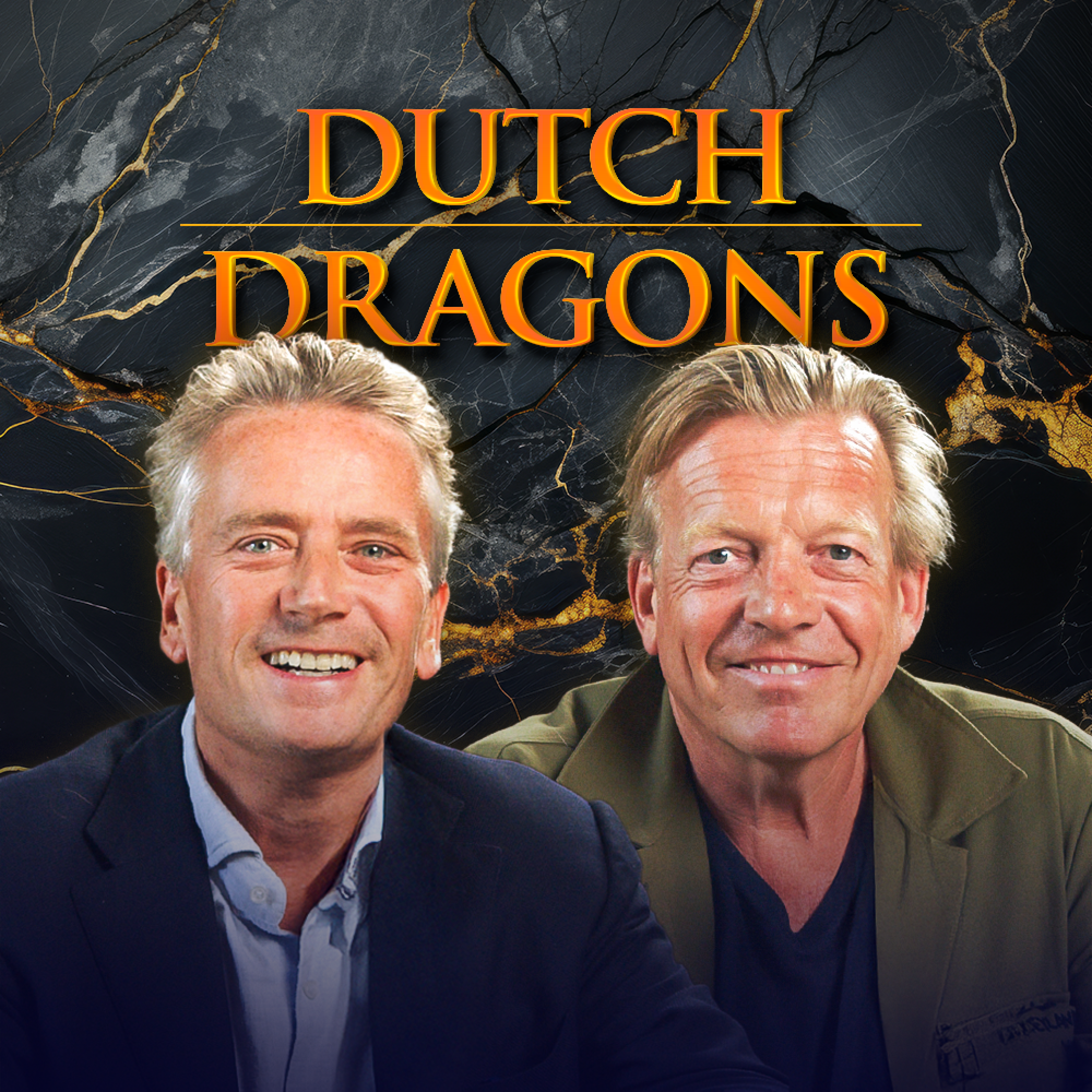 Dutch Dragons
Bas Witvoet, Pieter Schoen
Laatste aflevering 4 november 2026
-
 Jong Beleggen, de podcast
Pim Verlaan / Milou Brand
Laatste aflevering 29 oktober 2026
-
 Holland Gold
Laatste aflevering 27 oktober 2026
-
 Het Beurscafé
StockWatch
Laatste aflevering 3 november 2026
-
 IEX BeleggersPodcast
IEX
Laatste aflevering 30 oktober 2026
- Categorieën
- Zakelijk , Beleggen
- Status
- Loopt nog
- Verschijnt
- Elke week
- Lengte
- Meestal 55 min
- Afleveringen
- 79
- Laatste aflevering
- 3 november 2026
- Eerste aflevering
- 30 mei 2025
- Taal
- Engels