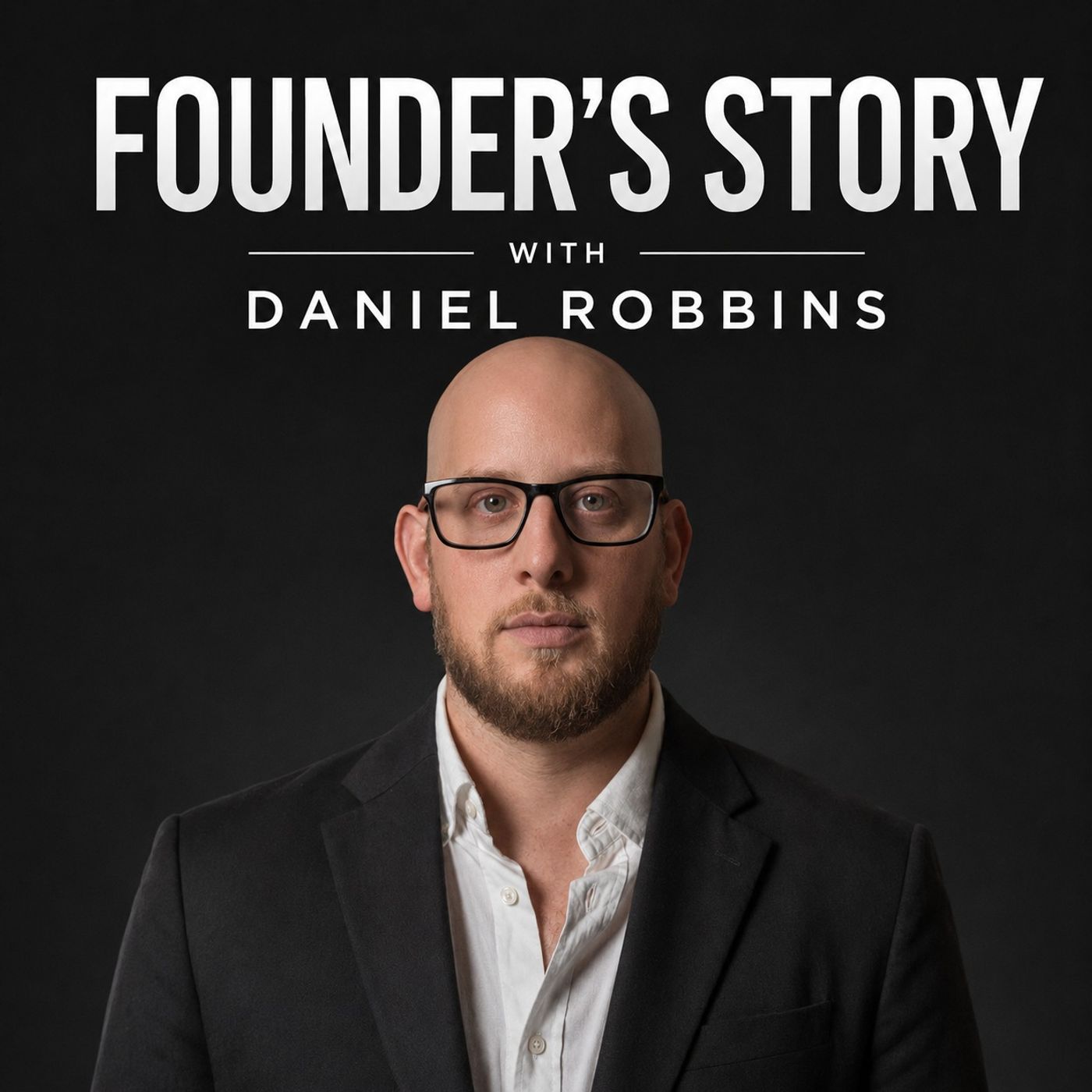
Founder's Story
Andere apps
Pocket Casts Overcast Castro Castbox Podcast Addict AntennaPod RSS-feed
"Founder's Story" by IBH Media isn't a business show. It's the conversation founders don't get to have anywhere else.
Think 60 Minutes, but for entrepreneurs. We sit down with the most interesting people in business and go past the highlight reel, past the pitch, past the polished version they give every other podcast. We go into the mud with them. The 2 a.m. doubts. The bet that almost ended everything. The moment they wanted to quit and didn't.
You'll hear from household names like Gary V, Codie Sanchez, Rob Dyrdek, and Tom Bilyeu, and just as often from founders you've never heard of who are building something the world needs to know about. Either way, the goal is the same: a real conversation that makes you laugh, makes you think, and sometimes catches you off guard with how much it makes you feel.
This is where the story behind the success finally gets told. This is "Founder's Story."
Afleveringen
-
Robert Herjavec: Why Most Founders End Up Broke (And Why I Walked Off Shark Tank)
4 november 2026 · 32 min
Daniel sits down with Robert Herjavec to explore why successful entrepreneurs can still struggle with money, how obsession fuels business growth, and what it really takes to build a company from nothing. Robert reflects on getting fired, bootstrapping his businesses, selling companies, and the surprising challenges that came with having access to significant capital. Lees meer
The conversation also explores behind-the-scenes disagreements on Shark Tank, including his reaction to MrBeast's $50,000 giveaway, the sacrifices founders make for success, and why Robert believes ambition without purpose can lead to unhappiness.
Key Discussion Points
Why successful founders still end up broke: Robert explains that entrepreneurship and wealth management require fundamentally different skills. Building a company demands risk-taking, speed, and conviction, while preserving wealth requires patience, diversification, and long-term thinking.
From getting fired to building a $200 million company: Robert recalls losing his job and starting a business because he needed to make his mortgage payment. He shares how he relied on credit cards and multiple mortgages, eventually building a company to $200 million before taking a bank loan.
The Shark Tank disagreement that made him walk off set: Robert reveals how he and Mark Cuban walked off the set after fellow Sharks agreed to invest in a founder without examining the business numbers. He also discusses why MrBeast's decision to give a contestant $50,000 for zero equity bothered him and how it challenged his understanding of what Shark Tank represents.
Why bootstrapping can eventually hold founders back: Robert explains how the financial discipline that helped him build successful companies became a disadvantage after selling to a major investment firm. He struggled to adjust from spending a few million dollars carefully to investing significantly more capital to accelerate product development and growth.
The hidden sacrifices behind entrep…
-
Auto Industry Pioneer: The Next Car You Buy, You Won’t Set Foot In A Dealership | David Boice
2 november 2026 · 39 min
Daniel sits down with David Boice to explore why buying a car remains so frustrating and how AI agents could transform the experience. David shares his journey from starting an automotive software company with his father at 22 to building Team Velocity and navigating decades of technological disruption. Lees meer
The conversation also explores surviving the automotive industry's financial collapse, the importance of preparation and cash reserves, managing family relationships in business, and why David had to change his leadership style as Team Velocity grew to approximately 700 employees.
Key Discussion Points
How AI could completely change the car-buying experience: David explains his vision of consumers using AI agents to compare vehicles, negotiate deals across dealerships, handle financing details, and arrange delivery. He believes the technology could eliminate much of the frustration, confusion, and wasted time associated with buying a car.
Starting a company at 22 with his father: David reflects on entering the automotive industry with little experience and building AutoMark alongside his father, a senior military leader. He shares how being young, taking risks, and learning strategic thinking helped the company grow into a major industry acquisition.
The unexpected downside of selling a successful company: David describes the accomplishment of selling his first company, but also the emptiness that followed when the business that had consumed his life was suddenly gone. That experience eventually led him to reunite with former colleagues and build Team Velocity.
Surviving the 2008 automotive collapse: David explains how Team Velocity endured substantial financial losses without panicking or laying off employees. Because the company maintained financial reserves and continued investing, it was positioned to capitalize on the Cash for Clunkers recovery while competitors struggled to respond.
Building a family business and finding the right people: David discusse…
-
Skims Co-Founder: $1M On Day One Set Me Up To Fail | Emma Grede
31 oktober 2026 · 47 min
In this episode, Emma Grede (co-founder of Good American, founding partner of SKIMS, and Shark Tank investor) opens up about the unfiltered realities of building billion-dollar brands. From Good American making $1M on its very first day and the intense behind-the-scenes pressure that followed, to dropping out of school at 16 to forge her own path in East London, Emma shares the gritty details of her journey. Lees meer
We dive into how to build a network from scratch, the biggest piece of conventional business advice she thinks is complete BS (and why building a "personal brand" early on is a trap), overcoming mom guilt, and the crucial negotiation advice she learned from Mellody Hobson.
Follow Emma:
IG: https://www.instagram.com/emmagrede/https://www.youtube.com/@UCX502l7IeiHUUlcUHQLSCaA
https://www.emmagrede.me/
Timestamps:
[00:00] - Intro: The pressure of Good American making $1M on day one
[03:07] - Keeping company culture together during impossible scaling
[05:37] - Dropping out of school at 16 and finding her early hustle
[07:33] - Sourcing motivation when you're starting from nothing
[10:24] - Breaking into fashion sponsorship and learning the art of selling
[11:53] - Are successful entrepreneurs born with it, or can grit be learned?
[13:08] - Scribe Ad Break
[14:18] - What powerful people understand about leverage that most don't
[15:48] - How to build a powerful network when you don't have one
[18:50] - How to use being underestimated in a room to your advantage
[20:39] - Do women actually support other women in business?
[26:01] - Why focusing on a "personal brand" is terrible advice for early founders
[34:08] - Motherhood, sacrifice, and completely reframing mom guilt
[40:12] - Life-changing negotiation advice from Mellody Hobson
[42:38] - The #1 trait all truly exceptional founders share
[44:24] - The one industry Emma would never start a business in[46:35] - Why you will never become successful until you stop lying to yourself
Hosted by Si…
-
Franchise Insider: The Quiet Millionaires Nobody Talks About (And How They Did It) | Ep. 460 with Alex Smereczniak CEO of Franzy
26 oktober 2026 · 33 min
Daniel sits down with Alex Smereczniak to explore why franchising may be a more practical path to entrepreneurship than starting a company from scratch. Alex shares how his college laundry business led him into franchising and how everyday business owners are quietly building substantial wealth through multiple locations, acquisitions, and proven operating systems. Lees meer
The conversation also explores which franchises offer attractive opportunities, how to finance acquisitions without putting all your savings at risk, why some franchisees fail, and how Franzy is making it easier for aspiring entrepreneurs to compare opportunities and understand the economics before investing.
Key Discussion Points
Franchising versus starting from scratch: Alex explains why the right path depends on personality, risk tolerance, and financial goals. Franchising offers structure and an established playbook, while independent startups give founders greater freedom but require them to figure everything out themselves.
How ordinary people build $100 million franchise portfolios: Alex shares examples of multi-unit operators who have quietly built businesses generating over $100 million in annual revenue by buying additional locations, expanding into multiple brands, and using acquisitions to scale.
Buying franchises without paying everything upfront: Alex explains seller financing, SBA loans, outside investors, and franchise roll-ups. He shares the example of an operator who acquired approximately 30 additional Midas locations through seller financing without borrowing from a bank.
The best and worst franchises to consider: Alex highlights moving companies, garage renovation businesses, and other home services as attractive categories with relatively accessible startup costs. He also warns about expensive, unproven food concepts, questionable franchise operators, unfavorable royalties, and buyers who fail to investigate unit economics.
Why franchise ownership is not passive income: Alex …
-
Serial Founder: I Failed For 3 Years, Sold A Company, Then Raised VC On A Napkin | Ep. 459 with Girish Redekar CEO and Co-founder of Sprinto
23 oktober 2026 · 34 min
Daniel sits down with Girish Redekar to explore his journey from a quiet, accidental founder who taught himself programming to building and selling Recruiterbox before launching Sprinto. Girish reflects on three years of failed ideas, the importance of customer validation, and why solving painful problems matters more than building impressive technology. Lees meer
The conversation also explores why AI is making software easier to create but harder to sell, the realities of enterprise sales, bootstrapping versus venture capital, and Girish's vision for autonomous software that works independently while bringing humans in when needed.
Key Discussion Points
From accidental founder to successful SaaS entrepreneur: Girish explains how he and his co-founder taught themselves programming in their late twenties because they couldn't afford developers. After spending three years experimenting with unsuccessful ideas, they built Recruiterbox around the unglamorous but important problem of managing hiring processes.
Why founders should stop falling in love with their ideas: Girish shares his biggest lesson from failure: become attached to the customer's problem, not your proposed solution. He explains how The Mom Test transformed his approach to validating ideas and why he interviewed roughly 30–50 founders before building Sprinto.
Why AI makes building a business harder: Girish argues that as software becomes cheaper and faster to create, identifying valuable problems and reaching customers become increasingly difficult. He explains why founders must find problems painful enough that customers are genuinely willing to pay to solve them.
The hidden difficulty of enterprise sales: Girish explains why large companies prioritize risk reduction over new features, how multiple decision-makers can derail a deal, and why a startup's product may need to be two or three times better than an established alternative to overcome concerns about adopting something new.
Bootstrapping versus ve…
-
Ex Microsoft Exec: Gary Vee Told Me Analog Is The New Digital, Here’s Why He’s Right | Ep. 458 with Vince Menzione Founder/CEO of Ultimate Partner
21 oktober 2026 · 32 min
Daniel sits down with Vince Menzione to explore why partnerships remain one of the most powerful and overlooked ways to grow a business. Vince shares how a single phone call unlocked a major government contract, eventually contributing to a company acquisition at 10 times its previous valuation. Lees meer
The conversation explores why most partnerships fail, what Vince learned from Microsoft's massive partner ecosystem, and why trust, accountability, and personal relationships matter more than ever in the age of AI. Vince also reflects on leaving corporate America, learning from his immigrant grandfather, surviving a serious bicycle accident, and building Ultimate Partner around one belief: being in the right room changes everything.
Key Discussion Points
The phone call that changed everything: Vince recounts calling a General Dynamics executive at 7 a.m. to bypass the usual gatekeepers. That conversation helped establish a partnership, opened access to a major U.S. Army contract, and ultimately led to an acquisition at 10 times the company's earlier valuation.
Why most business partnerships fail: Vince explains that companies often announce exciting partnerships, prepare presentations, and celebrate agreements without creating the accountability needed to execute. Successful partnerships require measurable objectives, executive commitment, and alignment across sales, marketing, product, and delivery teams.
What Microsoft taught him about partnerships: Vince discusses helping Microsoft develop its co-selling strategy and attract software partners to Azure. He explains why growing an ecosystem requires more than great salespeople and why the best partnership leaders must influence the entire organization.
Why AI makes human relationships more valuable: Vince shares a conversation with Gary Vaynerchuk about why face-to-face interactions are becoming increasingly important as AI-generated content, automated messages, and digital interactions make authenticity harder to re…
-
Lil Jon Reveals Why He Leaked Usher’s “Yeah!” | Ep. 457 with Lil Jon
19 oktober 2026 · 48 min
Daniel sits down with Lil Jon to explore the untold stories behind his biggest hits, his rise from Atlanta DJ to global music icon, and the creative instincts that helped him build a lasting career. Lil Jon shares how one word transformed “Goodies,” how “Yeah!” nearly never became a single, and what it meant to perform at the Super Bowl. Lees meer
The conversation takes a personal turn as Lil Jon discusses turning 50, going through divorce, discovering meditation, and navigating the loss of his son. He opens up about spirituality, acceptance, gratitude, and why there is much more to him than the loud, energetic persona the world knows.
Key Discussion Points
- The rise of the King of Crunk: Lil Jon explains how growing up around music, learning drums, and discovering DJing helped him develop the ability to control a crowd's energy. He reflects on how crunk evolved from Atlanta club culture into a worldwide movement.
- The untold stories behind his biggest hits: Lil Jon reveals how changing one word from “cookies” to “goodies” transformed Ciara's hit, why Usher's “Yeah!” had to be rebuilt after another artist released a song using the same beat, and how he leaked “Yeah!” to DJs to help turn it into a massive success.
- His first million and the power of intuition: Lil Jon remembers receiving a million-dollar publishing advance and explains why producing hit records requires instinct, timing, perfectionism, and knowing when to stop forcing a creative idea.
- From Dave Chappelle to the Super Bowl: Lil Jon recalls how an exaggerated impersonation on Chappelle's Show expanded his fame, how he eventually improvised a sketch with Dave Chappelle, and what it meant to serve as musical director and performer for Usher's Super Bowl halftime show.
- The transformation from partying to meditation: Lil Jon explains how turning 50, experiencing personal struggles, and going through divorce motivated him to change his mindset. Meditation, affirmations, and spiritual reflection eventua…
-
Nobel Prize Economist: 3 Choices Every Country Has On Climate | Ep. 456 with Gary Yohe
16 oktober 2026 · 46 min
Daniel sits down with Gary Yohe to explore what four decades of climate research reveal about the future of the planet. Gary explains why climate change is also an economic problem, whether it is too late to reverse course, and why misinformation and inaction concern him as much as rising temperatures. Lees meer
The conversation also explores Gary's Nobel Peace Prize experience, the threats climate scientists have faced, carbon markets, lessons from successful adaptation programs, and why hope matters even when optimism is difficult.
Key Discussion Points
- Are we past the point of no return? Gary says no, but warns that many climate impacts are already unavoidable and could persist for decades or centuries. He explains why reducing emissions today can still prevent worse outcomes.
- Abate, adapt, or suffer: Gary introduces the three fundamental responses to climate change: reduce greenhouse gas emissions, adapt to unavoidable impacts, and build resilience against the damages that remain.
- The hidden danger of climate misinformation: Gary argues that one of the greatest threats is the spread of misinformation and the resulting inability to coordinate meaningful responses. He also recounts the intimidation and threats faced by climate researchers.
- The Nobel Peace Prize and 195 countries: Gary shares his experience contributing to the IPCC and helping write 30 words on climate risk management that were accepted by consensus by 195 countries, shaping how policymakers approach uncertainty and adaptation.
- What actually works against climate change: The conversation examines carbon markets in Europe and elsewhere, along with an adaptation success story in South Asia where protecting livestock and addressing local evacuation barriers helped dramatically reduce flood deaths.
- AI, climate risk, and the future of science: Gary compares the potential threats of artificial intelligence and climate change, explains why science must be accessible to ordinary people, and shar…
-
8-Figure Entrepreneur: “I Embraced Synchronicity. Then My Business Started to Flourish”
14 oktober 2026 · 38 min
Daniel sits down with Rod Yancy to explore how mortality, intuition, fear, and purpose shape the way we build businesses and live our lives. Rod shares how he moved from law and finance into entrepreneurship, why a trip to India changed his relationship with intuition, and how Oath became more than an estate planning company. Lees meer
The conversation also dives into social media, consciousness, poker, manifestation, inheritance, AI, the future of work, and why thinking about death may be one of the most powerful ways to live with more intention.
Key Discussion Points
Rod explains the idea behind “resist what’s true and it only gets louder,” sharing how fear can push people into living someone else’s life instead of following what they know deep down.
He shares how synchronicities, including repeatedly seeing 11:11, eventually led him to India and opened him up to intuition as a serious force in life and business.
Rod discusses how poker helped train his decision-making, teaching him to combine math, pattern recognition, timing, and gut instinct when information is incomplete.
The conversation explores how Oath scaled beyond one market, and why Rod chose to stay focused on estate planning instead of expanding into unrelated legal practice areas.
Rod breaks down mortality awareness, explaining why contemplating death is not about dying, but about living with more clarity, urgency, love, and purpose.
Daniel and Rod discuss the future of work, inheritance, AI, human expression, and why people may need to reconnect with passion and purpose as traditional jobs change.
Takeaways
Intuition matters, but it often gets buried under fear. Rod says many people already have a deep knowing about what they are meant to do, but fear, expectations, and logic can cause them to resist it.
Social media can take over your consciousness. Rod describes scrolling as giving your attention away to an algorithm, which can trigger jealousy, comparison, and reactive thinking instead of creat…
-
Southern Charm Star: I Built An 8-Figure Pillow Brand My Own Cast Rooted Against | Ep.454 With Craig Conover
12 oktober 2026 · 46 min
Daniel and Kate sit down with Craig Conover for a candid conversation about childhood bullying, OCD, reality television, business, and personal growth. Craig reflects on how the pain and uniqueness he struggled with as a kid later became part of what made him relatable to millions of people. Lees meer
The episode also follows Craig’s journey from Southern Charm to building Sewing Down South, learning hard business lessons, choosing the right partners, managing fame, and using his platform to help people feel less alone.
Key Discussion Points
Craig opens up about being bullied as a child, how he internalized it, and how OCD routines and anxiety became part of his early life. Pasted text
He explains why he wants kids to understand that bullying is usually the bully’s issue, not proof that something is wrong with the person being bullied. Pasted text
Craig shares how structure, stopping Adderall, and building healthier routines helped lower the intensity of his OCD and bring more peace into his life. Pasted text
The conversation explores what Southern Charm gets right and wrong about him, and how Craig learned to stop blaming the edit and take more accountability for how he shows up. Pasted text
Craig breaks down how Sewing Down South started, why the right partners changed everything, and how a pillow business grew from fan support, pop-ups, and personal connection. Pasted text
He talks about fame, relationships, haters, Reddit, and why turning television exposure into a real business is easier said than done. Pasted text
Takeaways
The things that make you different can become your advantage. Craig says the qualities kids are bullied for often become the exact things people later love about them.
OCD requires patience from both sides. Craig explains that pressure from a partner can amplify the anxiety, while patience and understanding can help reduce it.
Structure can create freedom. Although it goes against his natural adrenaline-driven personality, Craig says str…
Vergelijkbare podcasts
-
 De deal van je leven
BNR Nieuwsradio
Laatste aflevering 26 oktober 2026
-
 Het MKB praat mee
BNR Nieuwsradio
Laatste aflevering 5 november 2026
-
 Dutch Dragons
Bas Witvoet, Pieter Schoen
Laatste aflevering 4 november 2026
-
 Hendriks en Hendriks
Powered by Debtt Group
Laatste aflevering 2 november 2026
-
 Geld is al wat telt
Sven Vonck
Laatste aflevering 5 november 2026
-
 Tess & Britt komen erop terug
For You Agency / Geuren & Kleuren Media
Laatste aflevering 3 november 2026
- Categorieën
- Zakelijk , Ondernemen
- Status
- Loopt nog
- Verschijnt
- Een paar keer per week
- Lengte
- Meestal 40 min
- Afleveringen
- 397
- Laatste aflevering
- 4 november 2026
- Eerste aflevering
- 28 maart 2020
- Taal
- Engels