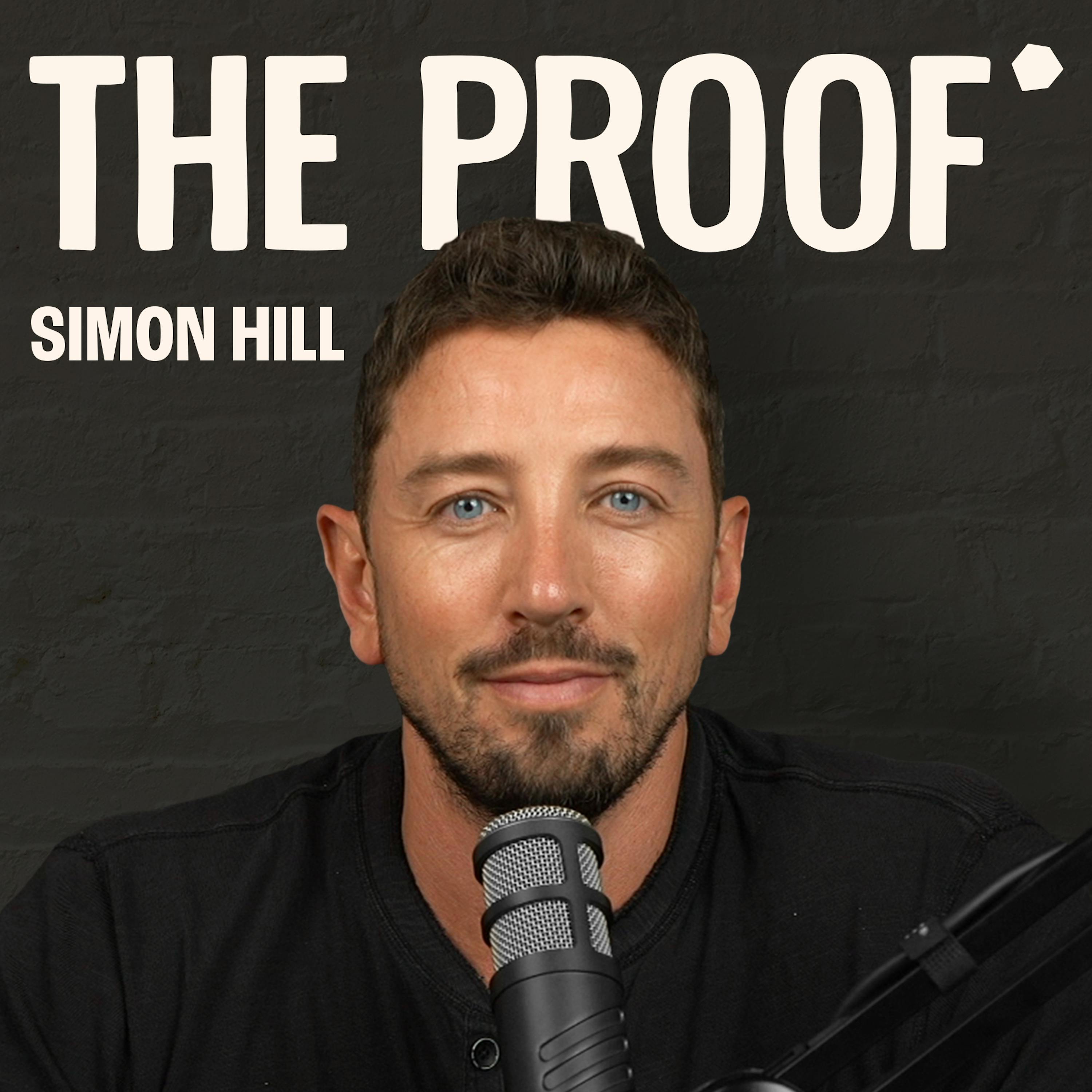
The Proof with Simon Hill
#105 bij Apple Podcasts Gezondheid en fitness
Andere apps
Pocket Casts Overcast Castro Castbox Podcast Addict AntennaPod RSS-feed
The Proof Podcast is a space for science-based conversation. Together with his guests, Simon Hill, a qualified physiotherapist and nutritionist, explores the health and longevity benefits that come with mastering physical exercise, nutrition, mindfulness, recovery, sleep, and alignment. Facts, nuance and trustworthy recommendations minus the hyperbole. All the proof you need to live better for longer.
Afleveringen
-
What Bone Density Scans Can't Tell You About Fracture Risk | A Masterclass on Bone Health
26 oktober 2026 · 1 uur 8 min
In this masterclass, I bring together six experts to untangle bone health, from fracture risk and DEXA scans to strength training, joint pain, and surgery. Dr Lora Giangregorio, Prof Belinda Beck, Dr Deborah Kado, Dr Howard Luks, Dr Lauren Colenso-Semple, and Dr Alyssa Olenick each add a different perspective. Lees meer
Bone density is only one part of the fracture story, and the advice around lifting heavy often runs ahead of the evidence. Together, we turn the confusion into a practical framework.
What we cover:
Why bone density is only one piece of fracture risk
What DEXA cannot see, and why bone shape matters
Whether you really need to lift heavy for your bones
A bare minimum strength program for beginners
When surgery helps, and why "bone on bone" is an unhelpful phrase
How to build movement into everyday life
The best program is the one you can sustain, and I hope this gives you the confidence to start.
To connect with our guests, you can find Dr Lora Giangregorio on TikTok, X, and LinkedIn, or learn more through her University of Waterloo profile. Prof Belinda Beck can be found through The Bone Clinic, ONERO, her Griffith University profile, and Facebook. Dr Deborah Kado has a Stanford profile and is on LinkedIn. Dr Howard Luks writes on Substack and is on X and Instagram. Dr Lauren Colenso-Semple is on Instagram and at drlaurencs.com, and Dr Alyssa Olenick is on Instagram and YouTube, with her programs at doclyssfitness.com.
If you enjoyed this episode, please rate and review The Proof on Apple Podcasts and share it with someone who would find it useful.
Want to support the show?
The best way to support the show is to use the products and services offered by our sponsors. To check them out and enjoy great savings, visit theproof.com/friends. You can also support the show by leaving a review on the Apple Podcast app and sharing your favourite episodes with friends and family.
This episode is brought to you by:
38TERA
38TERA’s BDR is a clinically dosed …
-
The Keto Study That Wasn't About Keto | Dr Nicola Guess
19 oktober 2026 · 49 min
Practising registered dietitian and senior research fellow at the University of Oxford, Dr Nicola Guess, returns to the show to discuss a new study whose findings were interpreted in quite different ways the week it came out. Dr Samuel Klein’s group at Washington University assigned people with prediabetes to one of three diets, carefully controlled their weight loss, and found that the arm labelled ketogenic reduced liver fat by 67%. Lees meer
Nicola’s view is that the label, and the conclusion many drew from it, deserve a closer look. Ketone levels in that arm were lower than you would typically expect on a ketogenic diet, which suggests something other than ketosis may explain the result. Her reading is that protein intake, rather than carbohydrate restriction, could be the more important variable. With roughly one in three adults carrying excess fat in the liver, often without symptoms, understanding what actually drives that reduction matters for the advice people receive.
What We Cover
Why this trial should not have been called a ketogenic diet study
How protein appears to lower liver fat even in the absence of weight loss
The 23% saturated fat arm, and why ApoB fell anyway
What likely changes once people move from weight loss into maintenance
Whether liver fat causes insulin resistance or simply marks it
Nicola's 35 grams of protein per meal target and how she builds a plate around it
Where seed oils and fibre actually sit in the evidence
This is a good example of why the label on a study matters as much as its headline number. If you have been told to cut carbohydrates to fix your liver, this conversation is worth your time.
To connect with Nicola Guess, visit NicolaGuess.com or find her on Instagram and YouTube.
If you enjoy the show, please leave a rating and review on Apple Podcasts. It helps new listeners find us.
Want to support the show?
The best way to support the show is to use the products and services offered by our sponsors. To check them out…
-
30 Years of Diet Trials: What a Stanford Scientist Is Most (and Least) Sure About | Dr Christopher Gardner
12 oktober 2026 · 1 uur 55 min
This is Christopher Gardner's eighth appearance on the show. Christopher is a nutrition scientist at Stanford, director of the Stanford Nutrition Studies Research Group, and the author of a new book, Food Sense: What to Eat and Why. He has run more than 20 human diet trials over three decades. Lees meer
Instead of relitigating the diet wars, we spend this conversation on the machinery underneath them: the trade-off between rigour and real life, why the definitive trial people keep waiting for will never be run, and what a null result is actually worth. I also put a few recent studies to him that cut against my own position.
What we cover
Why the perfect diet trial will never happen, and how that should change the way we read the evidence
The $1.4 million garlic study that found nothing, and why Christopher is proud of it
The four things every popular diet agrees on, and the six foods that divide them
His keto versus Mediterranean trial, and the two findings that went in opposite directions
How he approaches a new study that contradicts his own position
Why he is shifting his focus to hospital, university, and military kitchens
If you take one thing from this episode, let it be the habit of asking what a finding can actually carry before you change anything.
To connect with Christopher Gardner, visit the Stanford Nutrition Studies Research Group, pick up a copy of Food Sense: What to Eat and Why, or find him on Instagram and LinkedIn.
If this episode was useful, a rating and review on Apple Podcasts genuinely helps more people find the show.
Want to support the show?
The best way to support the show is to use the products and services offered by our sponsors. To check them out and enjoy great savings, visit theproof.com/friends. You can also support the show by leaving a review on the Apple Podcast app and sharing your favourite episodes with friends and family.
This episode is brought to you by:
38TERA
38TERA’s BDR is a clinically dosed gut health supplement …
-
My Plaque Protocol, and Why I Started a PCSK9 Inhibitor | Simon Hill, MSc
5 oktober 2026 · 57 min
A few weeks ago I published my own heart scans, and one number travelled further than the rest: a 48% drop in plaque over 16 and a half months. The question underneath that video was the obvious one. How? This episode is the answer, and it is also the part I could easily have left out. Lees meer
Three companies analysed the same two scans. HeartFlow found a 48% reduction, Cleerly found a 20% increase, and QAngio found essentially no change at all. Same heart, same images, and a sixfold spread in the absolute amount of plaque they measured. I walk through my full protocol, explain which analysis I anchor to and why, and tell you why, despite that headline, I have started a PCSK9 inhibitor.
What We Cover:
Why cumulative ApoB exposure matters more than the cholesterol reading you have today
My nutrition, training, and sleep protocol, and the supplements I deliberately avoided
Why three platforms measuring the same heart came back with 11.5, 60, and 74 cubic millimetres
The published concern about AI overestimation of plaque, and which analysis Dr Matthew Budoff trusts
How my percentile swings 25 points depending on the reference database
Why I started a PCSK9 inhibitor, and how I chose it over a statin
Why you should be sceptical of dramatic short-interval scan results, including mine
All three analyses agreed on the thing that matters: the plaque burden is low, and it is not progressing rapidly. That agreement is worth far more than the headline.
Enjoyed this episode? A rating and review on the Apple Podcast app helps more people find the show.
Want to support the show?
The best way to support the show is to use the products and services offered by our sponsors. To check them out and enjoy great savings, visit theproof.com/friends. You can also support the show by leaving a review on the Apple Podcast app and sharing your favourite episodes with friends and family.
This episode is brought to you by:
38TERA
Consider 38TERA's DMN prebiotic supplement a daily mult…
-
Why Your MRI Doesn't Mean You Need Surgery | Dr Howard Luks
28 september 2026 · 1 uur 27 min
Howard Luks is an orthopaedic surgeon with almost 30 years of experience, and a good deal of his week is spent telling people they do not need an operation. We work through the joints that bring most people into a clinic, knees, shoulders, Achilles tendons and ankles, and separate what a scan is actually telling you from what it is being used to justify. Lees meer
Almost everyone over 40 has something on an MRI that will be described as a tear. Very few of those people need surgery, and plenty have no pain at all. Howard's case, drawn from three decades in clinic and the sham-surgery and physiotherapy-controlled trials behind it, is that our language has raced ahead of the biology, and that the words we use change how people move and live.
What We Cover
Why "tear" and "bone on bone" are the wrong words, and what they do to a person's behaviour
What sham surgery trials showed for meniscus tears, rotator cuff tears and bone spur removal
How metabolic health shapes both your pain and your ability to heal after surgery
Why tendons respond to load rather than rest
Cortisone, PRP, stem cells and peptides: what the evidence supports and what is marketing
Ice, anti-inflammatories and ankle sprains, and why early movement beats a boot
Plyometrics, balance and power, and why they matter more than strength after 50
This is a conversation about being careful with language and honest about uncertainty, and about keeping your capacity so you can keep doing the things you care about.
To connect with Howard Luks, read his writing on Substack or find him on X and Instagram.
If you enjoy the show, please leave a rating and review on Apple Podcasts or Spotify. It genuinely helps other people find these conversations.
Want to support the show?
The best way to support the show is to use the products and services offered by our sponsors. To check them out and enjoy great savings, visit theproof.com/friends. You can also support the show by leaving a review on the Apple Podcast app a…
-
Birth, Breastfeeding, and the Truth About Baby Food | Dr Federica Amati
21 september 2026 · 1 uur 23 min
This is part two of my conversation with Dr Federica Amati, Head Nutritionist at ZOE and author of the Sunday Times bestseller Every Body Should Know This. In part one we covered preconception, fertility, and pregnancy nutrition. Here we follow the first 1,000 days through to the end: birth, breastfeeding, weaning, and the environmental exposures behind all of it. Lees meer
Much of this territory has become a source of guilt rather than clarity. Federica's framing is the one I keep returning to: this window is critical, but it is not fragile. Biology adapts, most of what shapes these years is structural, and where parents do have agency the evidence is more reassuring than the headlines suggest.
What we cover:
Why a critical window is not a fragile one, and what the first 1,000 days actually set
Choline, iodine, and omega-3 in pregnancy, and the "four eggs a day" myth
C-sections and the infant microbiome, and why the differences largely converge by age two
Breast milk as a living system, and an honest comparison with formula
Weaning without the marketing: the smoosh test, iron at six months, and early allergen introduction
Microplastics and endocrine disruptors, and the swaps that do the most work
Federica is exceptionally good at separating what the evidence supports from what the marketing claims, and she does it without ever making parents the villain.
To connect with Dr Federica Amati, follow her on Instagram at @dr.fede.amati or explore her work at ZOE. You can read more about the campaign she discusses in this episode at Plastic Free Babies, and her Sunday Times bestseller, Every Body Should Know This, is available wherever books are sold.
If this episode was useful, a rating or review on Apple Podcasts, or a follow on Spotify, makes a genuine difference to the show.
Want to support the show?
The best way to support the show is to use the products and services offered by our sponsors. To check them out and enjoy great savings, visit theproof.com/friends. Y…
-
The Liver Disease 30% of Us Have and Never Feel | Prof Aleksander Krag
14 september 2026 · 1 uur 21 min
Around 30% of the world's population has too much fat in their liver, and almost none of them know it. Liver disease stays silent until it is very advanced, which is exactly why so many people are found too late. Lees meer
In this episode I sit down with Prof Aleksander Krag, professor and department chair of gastroenterology and hepatology at Odense University Hospital and former Secretary General of the European Association for the Study of the Liver, to separate the frightening headline number from the thing that actually determines risk. It is not the fat. It is the scarring, and there is a simple test that can tell you whether you have any.
What we cover
Why a third of us have fat in our liver, and why that alone is not the thing to worry about
Steatosis versus fibrosis, and why only scarring predicts clinical liver disease
What blood-based alcohol biomarkers revealed about self-reported drinking
The single home measurement that tracks liver risk best
FIB-4, FibroScan, elastography, and ELF, explained plainly
How reversible liver damage really is, and where semaglutide and resmetirom fit
The policy levers Aleksander argues would prevent more disease than any clinic can
If you have ever wondered whether your drinking, your waistline, or your last set of liver enzymes is worth acting on, this conversation gives you a clear place to start.
To connect with Prof Aleksander Krag, visit the Centre for Liver Research (FLASH) at the University of Southern Denmark, follow him on X, or find him on LinkedIn.
If this episode was useful, please leave a rating and review on Apple Podcasts or Spotify. It genuinely helps more people find the show.
Want to support the show?
The best way to support the show is to use the products and services offered by our sponsors. To check them out and enjoy great savings, visit theproof.com/friends. You can also support the show by leaving a review on the Apple Podcast app and sharing your favourite episodes with friends and family.
Thi…
-
The Case for Treating Cholesterol Before Plaque Appears | Dr Thomas Dayspring and Dr Dan Soffer
7 september 2026 · 1 uur 42 min
Almost all of us have atherosclerosis, and almost none of us are told so, because "normal" cholesterol is a population average rather than a physiological target. Dr Thomas Dayspring and Dr Dan Soffer, both Masters of the National Lipid Association, join me for a conversation devoted entirely to primary prevention. Lees meer
They do not agree on everything, and that is the point. Tom argues ApoB is the cause of atherosclerosis. Dan calls it the necessary substrate. Between them you get an unusually honest look at how two experienced clinicians weigh evidence, uncertainty, and their own bias when treating someone who feels perfectly well.
What We Cover:
Why genes matter less for atherosclerosis than most people assume
Is ApoB causal, or simply necessary? The disagreement, in full
What "normal" cholesterol means, and the levels we are born with
LDL-C years: a five-second calculation you can run on yourself
What the 2026 dyslipidemia guideline changed
How they would manage a healthy man in his thirties with a family history and an ApoB of 100
Statin muscle symptoms, and the simple test that settles it
If you have ever been told your cholesterol is fine and wondered what that actually means, start here.
To connect with Dr Thomas Dayspring, find him on X, where he posts as @Drlipid. To connect with Dr Daniel Soffer, visit his Penn Medicine profile.
Want to support the show?
The best way to support the show is to use the products and services offered by our sponsors. To check them out and enjoy great savings, visit theproof.com/friends. You can also support the show by leaving a review on the Apple Podcast app and sharing your favourite episodes with friends and family.
This episode is brought to you by:
38TERA
Consider 38TERA's DMN prebiotic supplement a daily multivitamin for your gut. Formulated by yours truly and gastroenterologist Dr Will Bulsiewicz. Use code THEPROOF for a discount at checkout.
38Tera ships to the United States, Australia, and New Zealand.
…
-
Bone Health, Falls, Medications & Healthy Longevity | Dr Deborah Kado
31 augustus 2026 · 1 uur 35 min
Everyone wants to talk about longevity. Almost no one wants to talk about gerontology, the field that has been studying how to age well for a century. Dr Deborah Kado, Stanford professor of medicine and geriatrician, joins me to bridge that gap. Lees meer
From bone health and balance to deprescribing, gut microbiome research, and the surprising power of your attitude towards ageing, this is a masterclass in what actually matters for a long, well-lived life.
What We Cover:
Why "longevity science" is largely gerontology rebranded
A positive attitude towards ageing and its link to lower dementia risk
Balance, power training, and preventing falls and fractures
The truth about osteoporosis medications and the scare that drove millions away
Why extra weight after menopause can be protective
Vitamin D, sleep regularity, and the gut microbiome
This one will change how you think about growing older, whatever your age.
To connect with Dr Deborah Kado, visit her Stanford profile or find her on LinkedIn.
Enjoyed this episode? A rating and review on the Apple Podcast app helps more people find the show.
Want to support the show?
The best way to support the show is to use the products and services offered by our sponsors. To check them out and enjoy great savings, visit theproof.com/friends. You can also support the show by leaving a review on the Apple Podcast app and sharing your favourite episodes with friends and family.
This episode is brought to you by:
38TERA
Consider 38TERA's DMN prebiotic supplement a daily multivitamin for your gut. Formulated by yours truly and gastroenterologist Dr Will Bulsiewicz. Use code THEPROOF for a discount at checkout.
38Tera ships to the United States, Australia, and New Zealand.
ProLon
ProLon’s 5-Day Fasting Mimicking Diet is a science-backed, plant-based program designed to support metabolic health while keeping your body in a fasting-like state. Get 15% off sitewide plus a $40 bonus gift at ProLonLife.com/THEPROOF.
ProLon ships …
-
Type 2 Diabetes Remission in the GLP-1 Era | Prof Roy Taylor
25 augustus 2026 · 1 uur 25 min
Professor Roy Taylor returns, three years after his first appearance, with the five-year DiRECT trial results and a clear-eyed assessment of where diet-driven type 2 diabetes remission stands in the GLP-1 era. Lees meer
The evidence is now solid: type 2 diabetes is, for many, a reversible condition of excess fat in the liver and pancreas. But keeping it in remission demands keeping the weight off, and the new generation of weight loss drugs comes with marketing claims that Roy says have no evidence behind them.
What We Cover:
The Twin Cycle Hypothesis and personal fat threshold
Five-year DiRECT data: durable remission, halved hospital admissions, fewer cancers
Why regaining the weight means the diabetes returns
GLP-1s: what they genuinely do, and what's marketing
The muscle loss panic, put in perspective
Gestational diabetes and pre-pregnancy weight
Whether you have type 2 diabetes, care for someone who does, or simply want to understand one of the biggest shifts in modern medicine, this conversation delivers.
To learn more about Professor Roy Taylor's work, visit his research site at Newcastle University or read his book Life Without Diabetes. Clinicians can also explore his type 2 diabetes remission toolkit for general practice.
Enjoyed this episode? A rating and review on the Apple Podcast app helps more people find the show.
Want to support the show?
The best way to support the show is to use the products and services offered by our sponsors. To check them out and enjoy great savings, visit theproof.com/friends. You can also support the show by leaving a review on the Apple Podcast app and sharing your favourite episodes with friends and family.
This episode is brought to you by:
38TERA
Consider 38TERA's DMN prebiotic supplement a daily multivitamin for your gut. Formulated by yours truly and gastroenterologist Dr Will Bulsiewicz. Use code THEPROOF for a discount at checkout.
38Tera ships to the United States, Australia, and New Zealand.
Upwork
Post yo…
Vergelijkbare podcasts
-
 Een serie over voeding
Arie Boomsma / Corti Media
Laatste aflevering 4 november 2026
-
 Een Podcast over Voeding & Broodje Jaap!
Evidence based foodcollectief I'm a Foodie
Laatste aflevering 4 november 2026
-
 Afvallen in de overgang
Shirley Verduin
Laatste aflevering 30 oktober 2026
-
 Maak Afvallen Makkelijk
Mr. Food Coach
Laatste aflevering 2 november 2026
-
 Healthy you • Happy you | Koolhydraatarm & Gezond Leven
Noor | The Nourishing State
Laatste aflevering 2 november 2026
-
 Lobke Faasen Podcast
Lobke Faasen
Laatste aflevering 23 oktober 2026
- Categorieën
- Onderwijs , Zelfontwikkeling , Gezondheid , Fitness , Voeding
- Verschijnt
- Elke week
- Lengte
- Meestal 1 uur 25 min
- Afleveringen
- 439
- Eerste aflevering
- 10 april 2018
- Taal
- Engels